


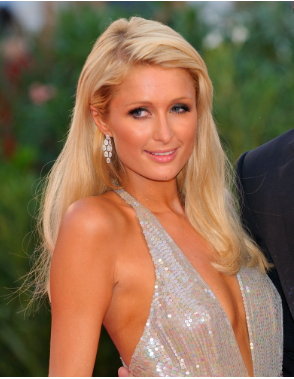
Paris Hilton stood on Capitol Hill this week, draped in designer history and hard earned clarity, and finally said the quiet part out loud in a room that usually pretends not to listen to women at all. On Thursday, the reality TV heiress turned advocate addressed lawmakers about the 2004 release of a sex tape that featured her without consent. She was joined by Representative Alexandria Ocasio Cortez of New York and Representative Laurel Lee of Florida, a rare bipartisan lineup for a conversation that should never have been controversial in the first place. Protecting women from sexual exploitation is not radical. It is overdue.
“When I was 19 years old, a private, intimate video of me was shared with the world without my consent,” Hilton said. “People called it a scandal. It wasn’t. It was abuse.” Say it louder, because too many folks still whisper around that truth.
Hilton was there to support the DEFIANCE Act, legislation that would finally give victims of AI generated and non consensual explicit images the right to fight back in court. The bill has already passed the Senate and aims to hold accountable anyone who creates, distributes, or profits from sexual exploitation in the digital age. An age that learned early how to consume women’s pain and call it entertainment.
“There were no laws at the time to protect me,” Hilton explained. “There weren’t even words for what had been done to me.” And that part matters. The internet was still young in 2004, but misogyny was already fluent. What happened to her became a punchline, a marketing tool, and a cultural shortcut to dismiss her as unserious, disposable, and deserving.
Let us address the myth that refuses to die. Yes, Paris Hilton remained famous. Yes, she built an empire. And yes, people love to say she benefitted from her sex tape as if success magically cancels out trauma. As if money heals violation. As if survival equals consent. That logic has always been lazy, cruel, and deeply gendered.
“They laughed and made me the punchline,” Hilton said. “They sold my pain for clicks, and then they told me to be quiet, to move on, to even be grateful for the attention.” Grateful. For abuse. That expectation is one society reserves almost exclusively for women. Especially women whose suffering gets wrapped in glossy headlines and sold back to them as opportunity.
Hilton acknowledged that she eventually had the platform to reclaim her narrative, but she made it clear that reclamation is not the same as benefiting. It is adaptation. It is armor. “When your image is violated, it doesn’t disappear,” she said. “It lives inside you, but so does your power.” That power, she explained, came from telling the truth, not from the violation itself.
The tape was filmed by her then boyfriend Rick Salomon when Hilton was a teenager. In her 2024 book Paris The Memoir, she wrote that she felt pressured by the much older Salomon to record it. When the footage was released without her approval, Salomon sued her for defamation. Let that sink in. She countersued, won damages, and donated the money to charity. Because even in the middle of being exploited, she was expected to be graceful.
In a 2021 interview, Hilton called the tape “something that will hurt me for the rest of my life.” She described the betrayal, the public humiliation, and the cruelty of being told the world believed she had done it on purpose. “That killed me,” she said. “It still gives me post traumatic stress disorder to talk about it.” Success did not erase that. Fame did not soften it. Time did not magically heal it.
Now, at 43, Hilton is still unpacking the damage while pushing the culture forward. Her upcoming documentary Infinite Icon A Visual Memoir, set to be released January 30, will explore her 2024 album of the same name and how music became a refuge during her darkest moments. The film will also confront the misogynistic media narratives that shaped her public image and revisit her experiences at troubled teen schools where she says she was abused.
Paris Hilton is not asking for sympathy. She is demanding accountability. And if the only takeaway some people still have is that she benefitted from her exploitation, then they are missing the entire point on purpose. Survival is not profit. Visibility is not consent. And a woman telling the truth about what happened to her does not owe anyone silence, gratitude, or a smile.




Leave a Reply