


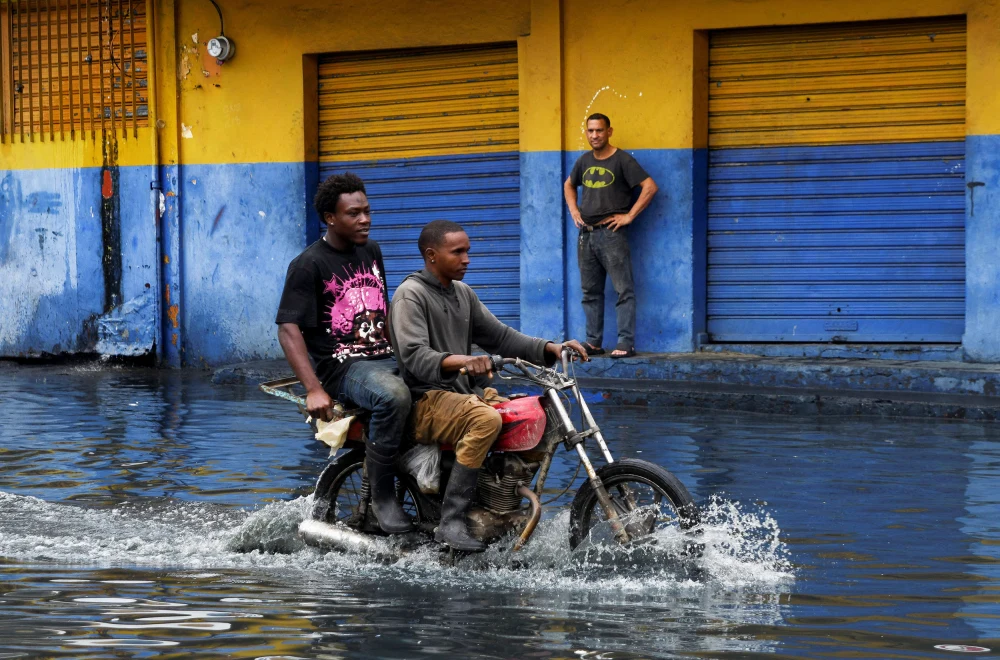
PETIT-GOÂVE, Haiti—Listen, when that water hits, it don’t wait for the rooster to crow. Most folks in the southern coastal town of Petit-Goâve were sleeping deep when the La Digue river said, “Enough is enough,” right after midnight.
By the time the people woke up, it was already a nightmare. The riverbanks couldn’t hold, and the current turned into a monster, snatching up children, cars, and whole homes as the outer bands of Category 5 Hurricane Melissa—one of the strongest ever recorded in the Atlantic—tore through southern Haiti.
You hear stories of pure grit: A man who had to bust out a window just to survive. A mama, holding tight to her baby boy, getting swept away but managing to grip a car, saving her son but breaking her leg in the process. They lived, yes, but Melissa left a trail of deep pain, killing at least 43 people in Haiti, with the worst of the tragedy landing right here in Petit-Goâve. More than a dozen souls are still missing.
The Mourning and the March
Saturday was a day of wails and white garments as the community came together to mourn their own. You could feel the hurt vibrating in the air.
“Where is my strength?!” cried Fanile Estinval, dressed in all white, arms open to the sky, grieving her two sons that the storm took.
Eighteen caskets, small and large, draped with bright yellow and orange flowers, were carried into the public square. The sight was heavy—Petit-Goâve lost at least 10 of its children that night. Survivors were weeping, wailing, mixed with the guilt of still breathing.
But grief is a fire that can turn to rage. That anger is bubbling, too. A protest is set for Monday along the main highway, a direct call to the government: They demand faster relief and a real response. The air is thick with tension because some folks believe straight up: these deaths could have been prevented with better planning and better infrastructure.
The Aftermath: Hunger, Sickness, and Struggle
While Melissa did her major damage when she hit Jamaica (killing 45 there), the real fallout here in Haiti is going to stick around for months. Officials are warning us. Hundreds of people have lost everything—their jobs, their homes, and now, they are going hungry.
Tyrese and Mona Scott-Young even pulled up to Jamaica with relief efforts, but Haiti needs that same energy amplified.
Petit-Goâve used to be the bedrock—a farming community with a bustling market. Now? The U.N.’s World Food Program director, Wanja Kaaria, says 90% of those fields were washed away. “It was very devastating,” she stressed. “It will take a while to really restore the markets.”
WFP has managed to get food out to over 40,000 people and plans to start cash transfers soon. But the struggle is real: WFP couldn’t even pre-stock emergency supplies this year due to funding issues.
Now, the sickness is creeping in. There are over 30 suspected cholera cases and six deaths in Petit-Goâve alone. UNICEF is doing the work—chlorinating water, setting up clinics—but access is tough.
This hurricane wasn’t just a storm; it was an insult added to injury. It slammed down right on top of deep poverty, political chaos, rising hunger, and unchecked gang violence.
Sergile Henry from Project Hope says it was “catastrophic.” He talked about finding two small children in a shelter, completely alone, unable to locate their parents.
As for Fanile Estinval, standing over the caskets of her sons, the question is heartbreaking and eternal: “A mother usually doesn’t bury her children… When I die, who is going to bury me?”





Leave a Reply